OffScriptConferences & Events
One hour, one real start-up, and teenagers asked to make it do some good
Teams of teenagers took a real start-up back to its first year, picked a cause and a partner, then had to show how it would pay. Seven ideas reached the wall in an hour.
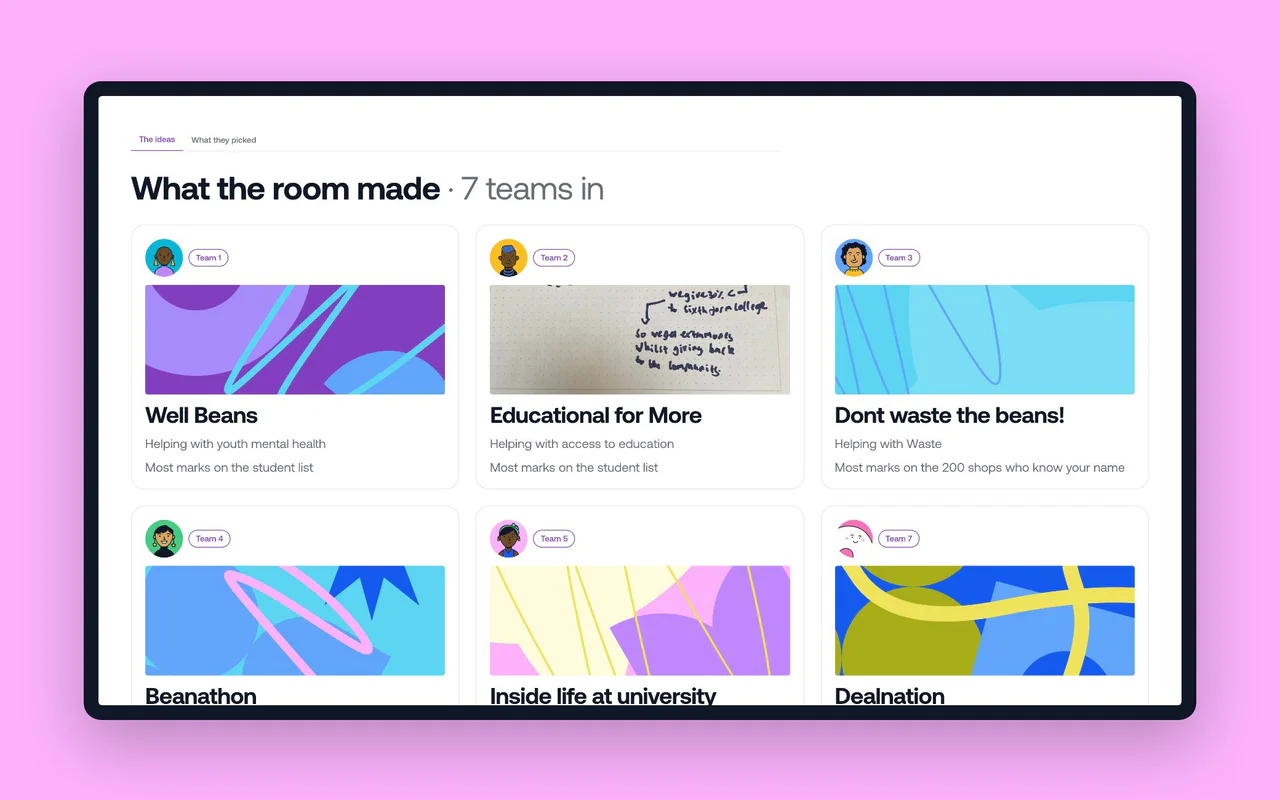
7business ideas sent in, in one hour
Every team has a cause, a partner and a plan for doing some good. Then the second sprint opens with a condition: show how this makes the business money, or it doesn't happen.
The challenge
OffScript Generation Summit is a one-day event in Kings Cross for young Londoners, with outreach through Camden and Hackney Councils. We had a Saturday lunchtime slot: an hour, mostly 16 to 19 year-olds, with a fair few parents in too.
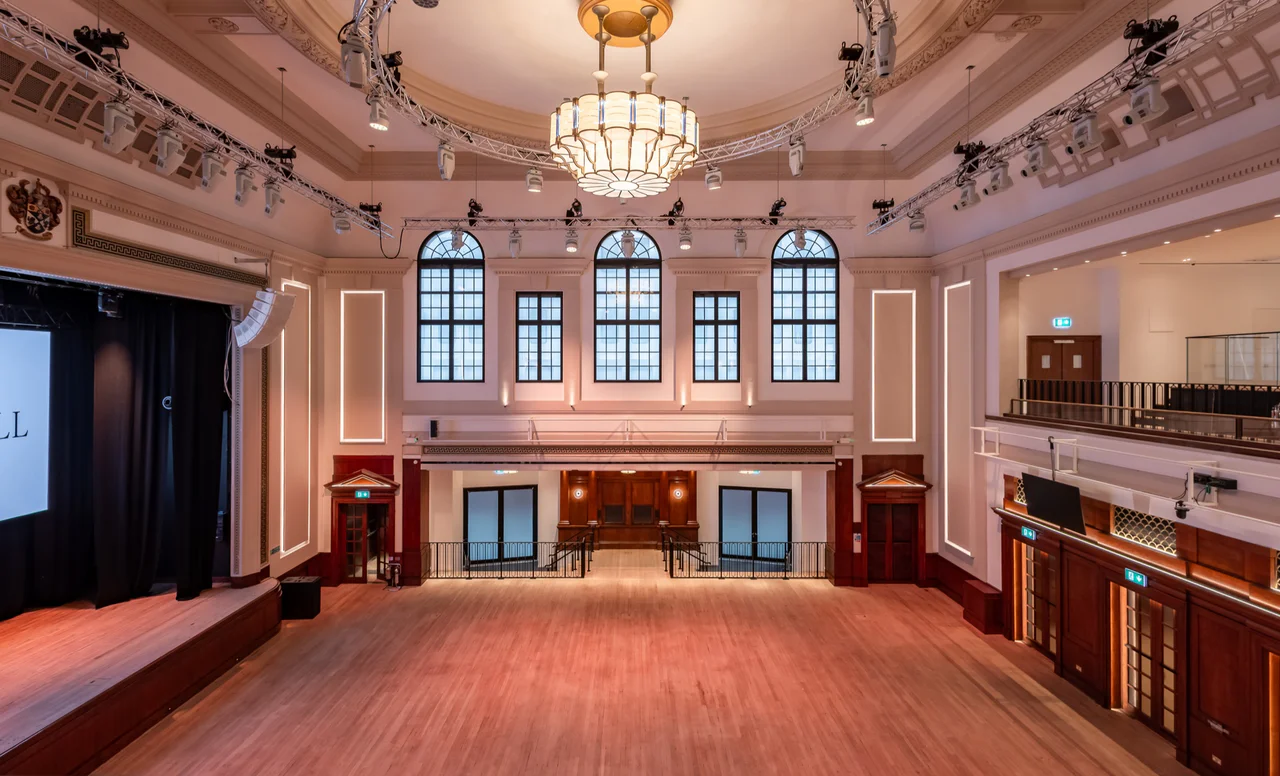
An hour is enough for a talk about starting a business. We wanted the hour to feel like running one, with a real company, a real constraint and a real person to answer to at the end.
What we built
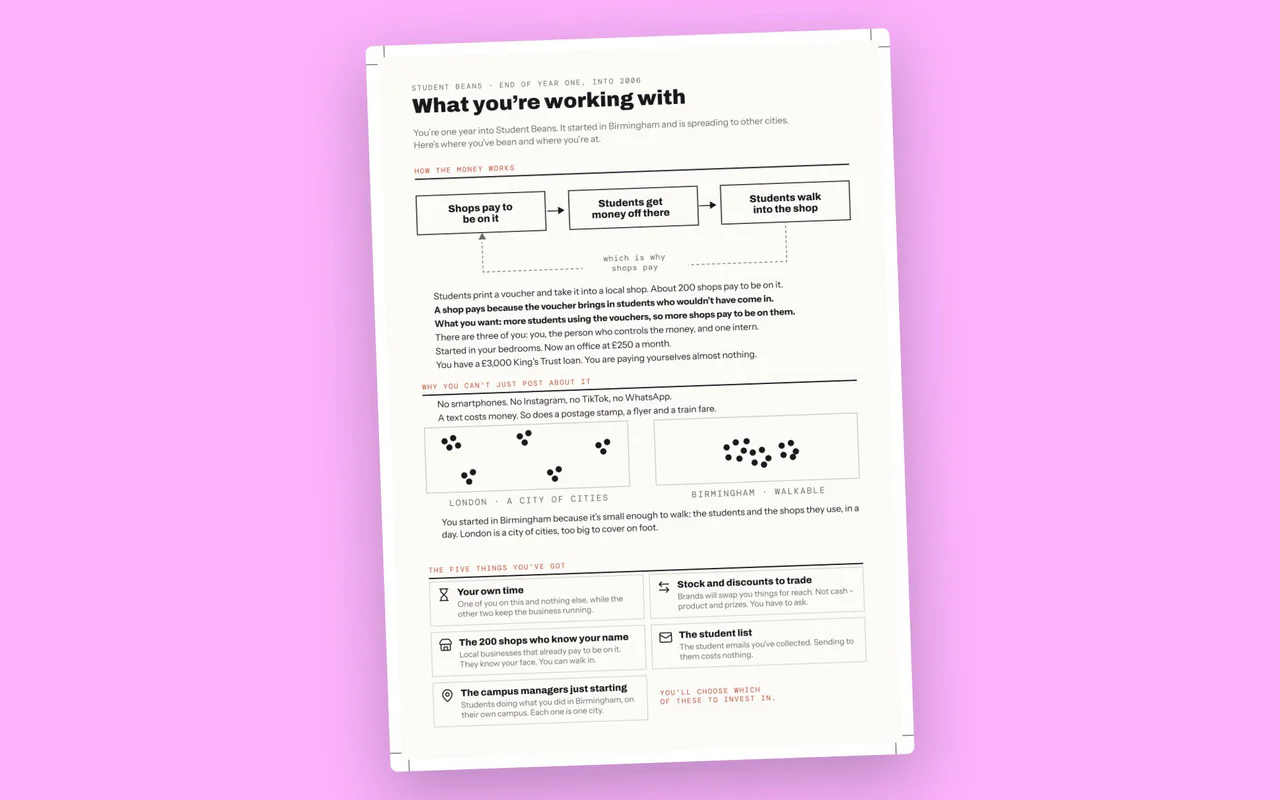
The live case was Student Beans, the student discount company, taken back to the end of its first year. At that point it was three people in Birmingham, with about 200 local shops paying to be on its vouchers, an office at £250 a month and a £3,000 King's Trust loan. Nobody had a smartphone yet, so every text cost money, and so did every postage stamp.
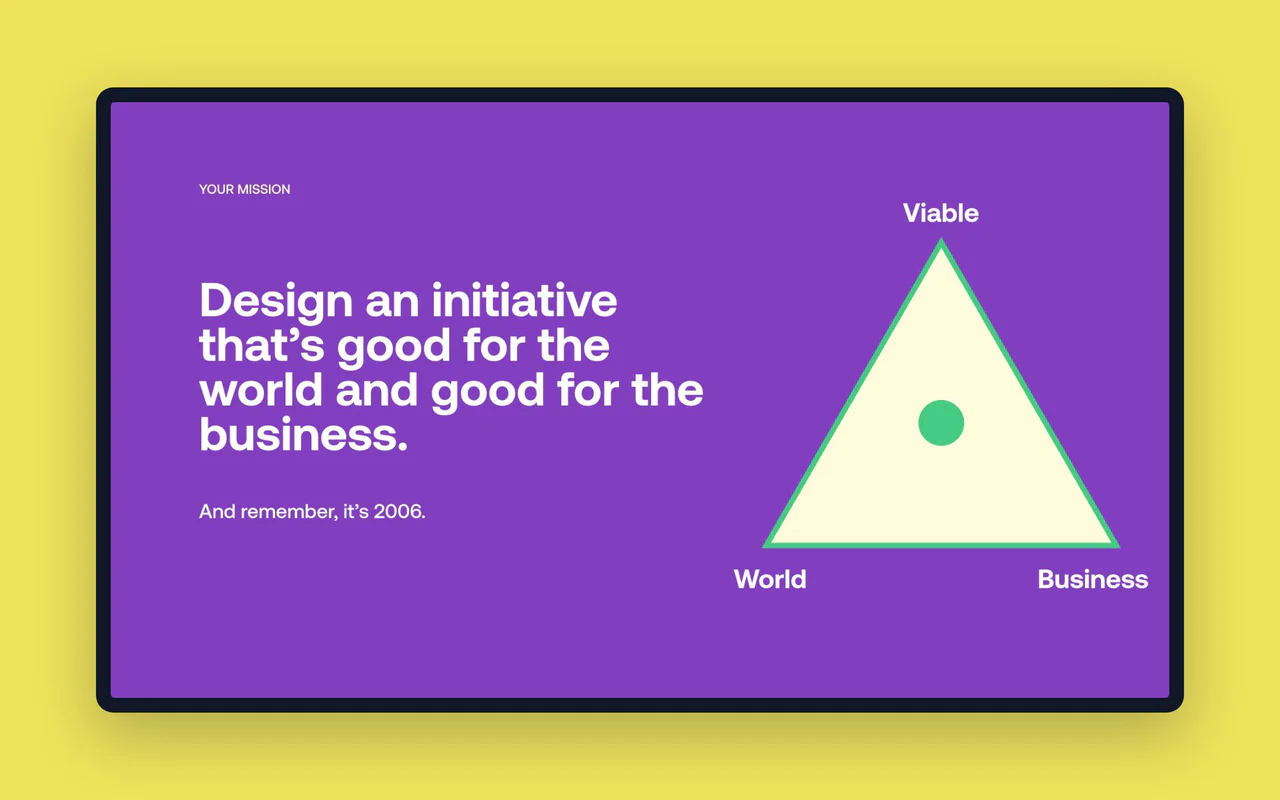
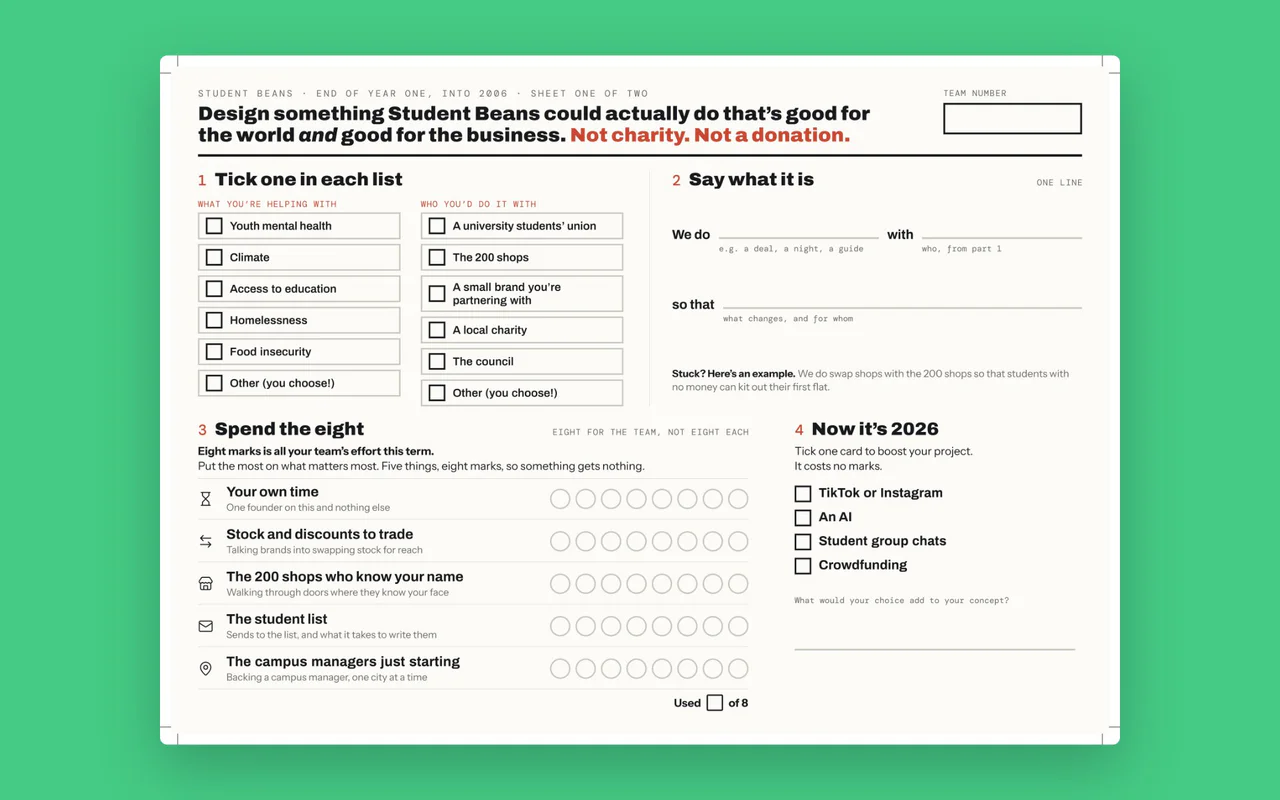
The brief on the first sheet: design something Student Beans could actually do that's good for the world and good for the business. It couldn't be charity, and it couldn't be a donation.
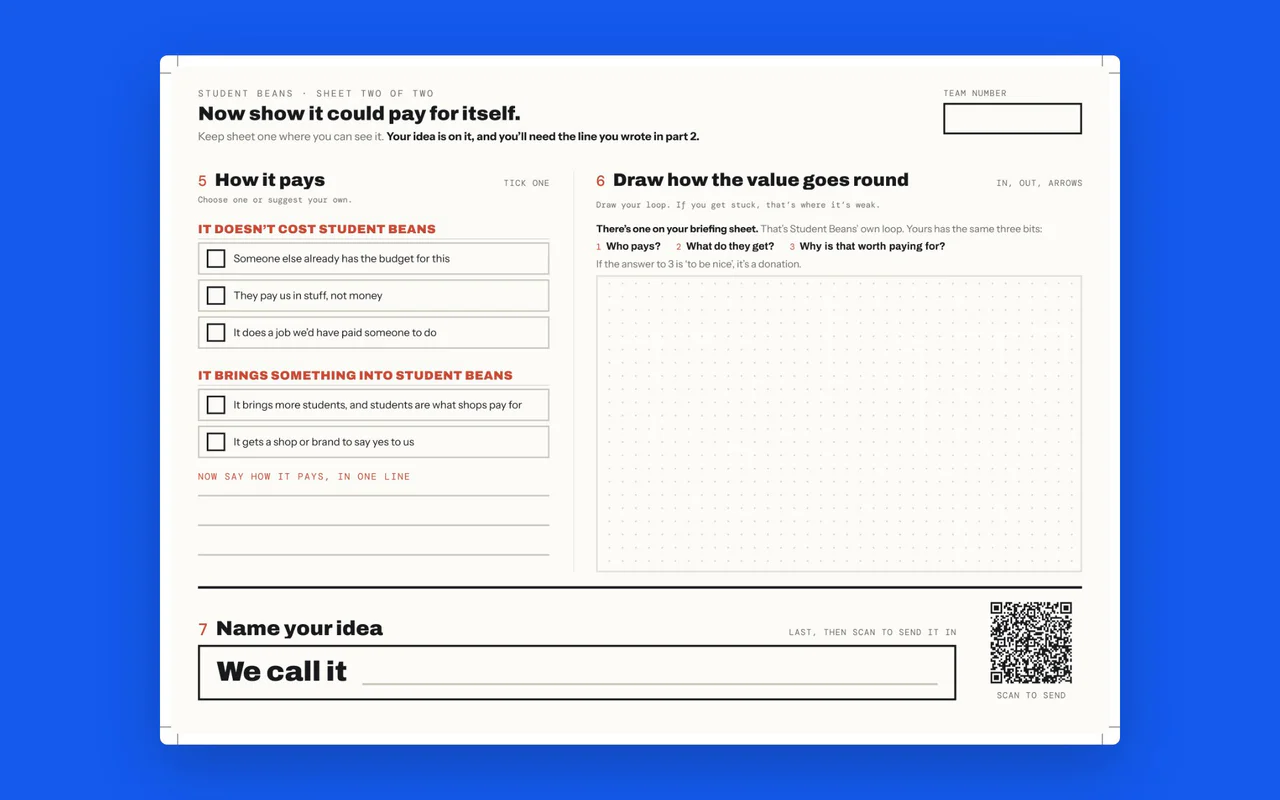
Teams of three or four sat with clipboards, two A3 sheets and a fact sheet. They had eight marks to spend across five things the company had: its own time, stock and discounts to trade, the 200 shops who knew its name, the student list, and the campus managers just starting out. Then one card brought them back to now, a choice of TikTok, an AI, student group chats or crowdfunding.
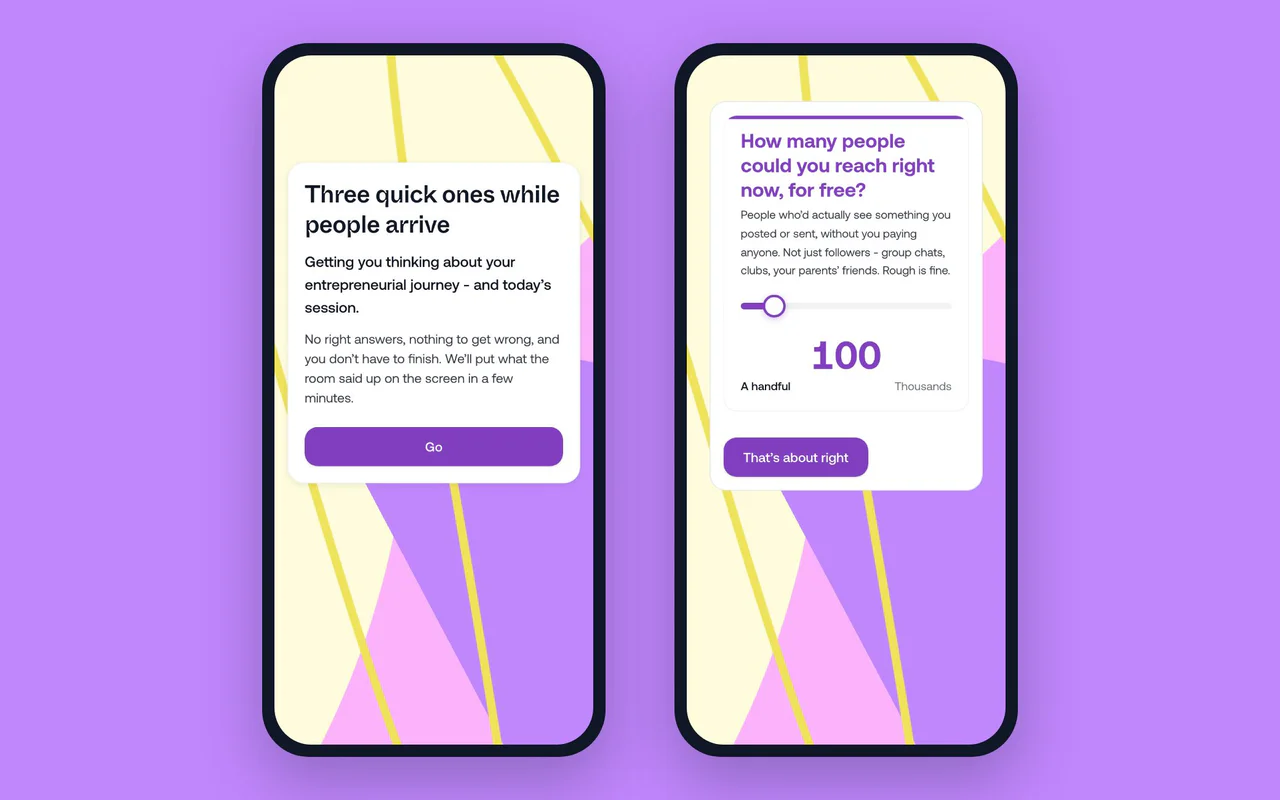
One rule held it all together: anything the teams had to think about happened on paper, and anything on a phone took one tap and less than thirty seconds. We built it as a standalone Rondo playable for the day, a phone that paces itself and a wall on the big screen.
Inside the session
One session · an hour
- On the way inThree quick questions on phones, straight onto the big screen
- Student Beans in 2006How the company made its money, and the mission
- Sprint oneA cause, a partner, and where the eight marks go
- Sprint twoHow it pays, and a name
- Send it inOne photo of sheet two per team, onto the wall
- The co-founder walks inA Student Beans co-founder, in person, for the showcase and questions
It started before anyone sat down. The first question on the phones was whether you'd ever sold anything to anyone, and half the room had. Of the rest, four had tried and it flopped, four never had, and two had only sold to family.
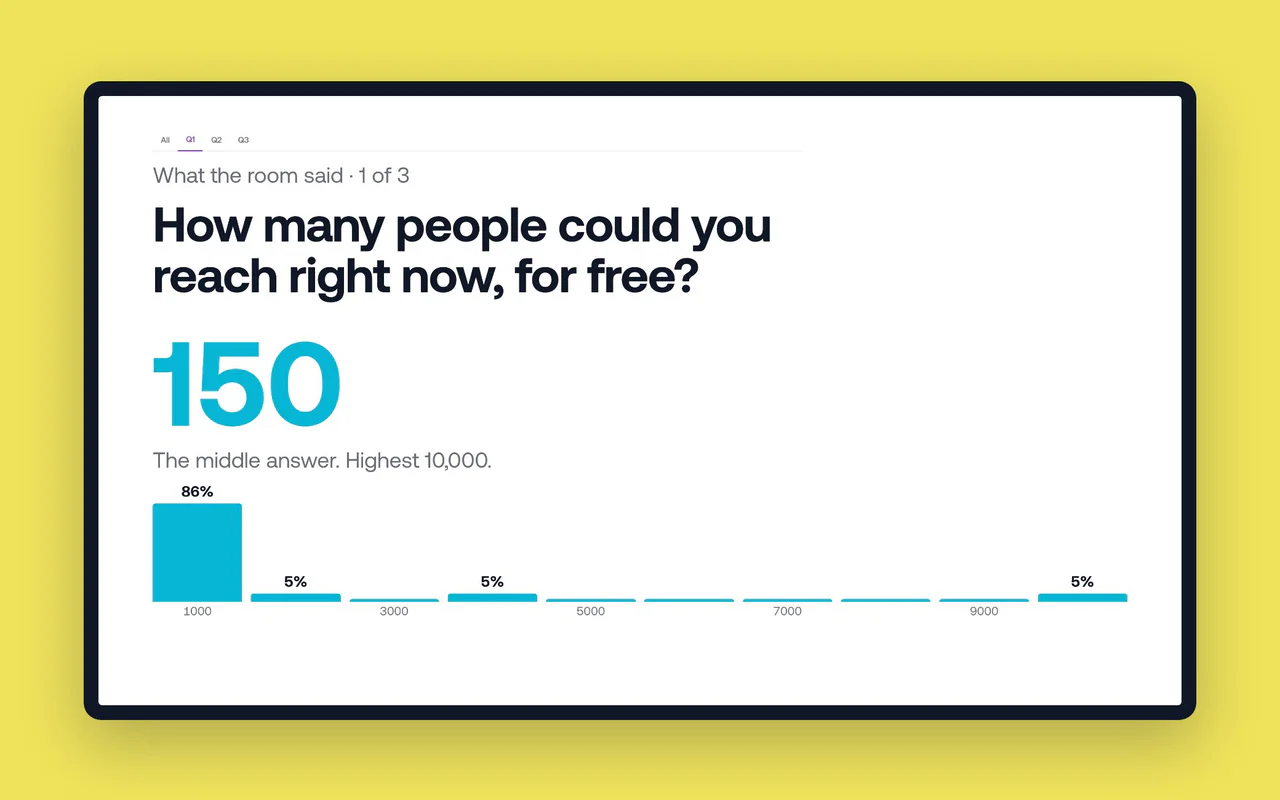
The other two were about reach and saving money, both at the heart of the case. How many people could you reach right now, for free? The middle answer was 150, and 18 of 21 said under a thousand. How far would you walk to save a fiver? The middle answer was fifteen minutes, and two people wouldn't move at all.
Three tests for every idea
- Good for the worldA cause the team could name, and a sentence for who it helps and what changes.
- Good for the businessEither it doesn't cost Student Beans anything, or it brings something in.
- Something you could launchIn 2006, with three people, 200 shops and a £3,000 loan.
Then the co-founder walked in. Teams had built their ideas for his company without knowing he was coming, and the last part of the hour was theirs to show him.
What the teams made
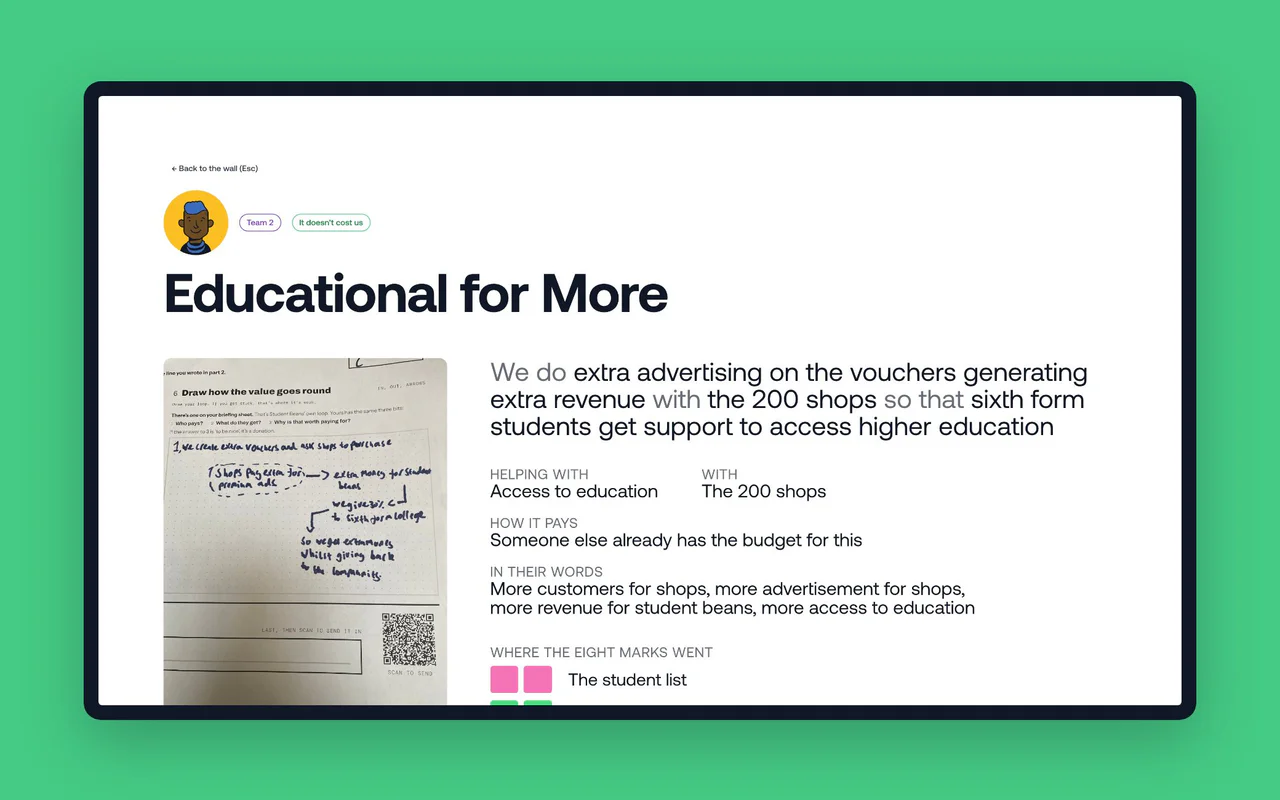
Seven teams sent an idea in. Two took on mental health, two education, two food and one waste. Four found a way it cost Student Beans nothing; three found a way it brought money in. All seven picked TikTok as their 2026 card, and three of the names were bean puns.
“Shops pay us to sell their near expiry/defective goods”
“More customers for shops, more advertisement for shops, more revenue for student beans, more access to education”
“Brand and shops pay to be involved in a good cause”
“The money raised could fund therapy access for the students”
Young people picked it up faster
The session was packed, enough that it moved rooms. When we looked back with OffScript afterwards, one thing stood out: the young people picked it up fast, while the parents got stuck and slowed their tables down. An hour turned out to be the right length.
What happened next
We're now working on a version schools and youth groups can run themselves, without us at the front: the same paper, the same phone, the same wall.
Want a live case your people can't sit back from? Book a 20-minute call →
More case studies
Portal Schools
Three edutainment prototypes in eight weeks
A co-designed innovation challenge that generated three prototypes in under eight weeks: a trivia game format, a mobile learning app and an educational news show.
Columbia Business School x DIG
Turning a founder talk into a leadership lab
A guest founder talk, rebuilt as a ninety-minute live lab: Columbia MBA students worked DIG's real challenges and handed back ideas the founder hadn't considered.
mci group
A keynote and workshop for a global leadership academy
A keynote for 350 leaders, then a workshop for 40 of them, on calls with no clear answer. The CEO kept using the keynote's language for weeks.