For professional services firms
The client gets whoever's on the account.
Your best people can read a client. Everyone else learns by shadowing. We give the whole team the practice, before the next renewal.
Play one: 6 minutes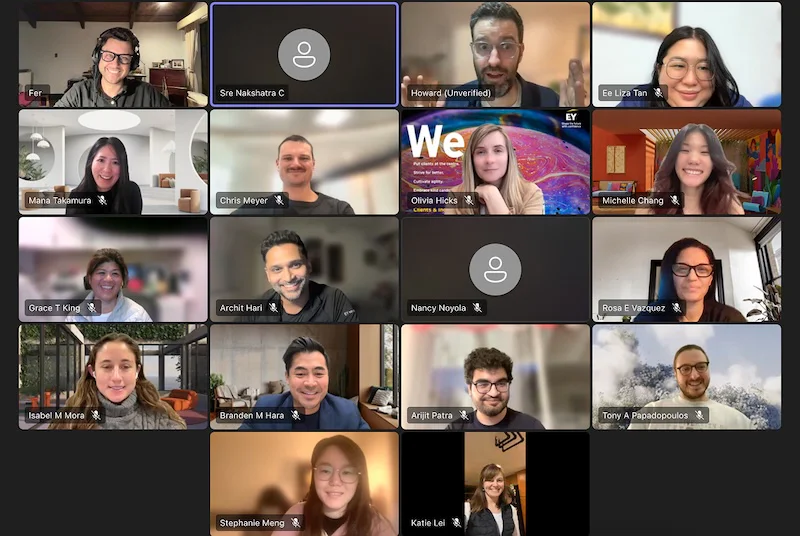
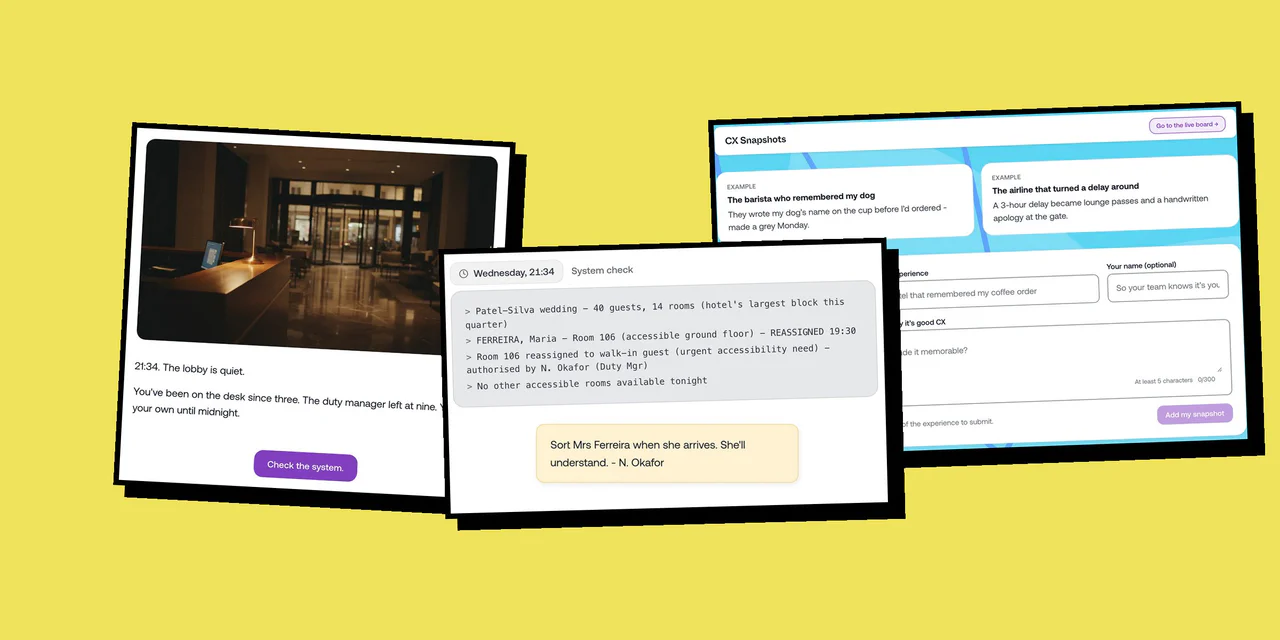
Try one now. No sign-up.
Five to eight minutes each. Your team plays the full versions, set on clients like yours.
- The Front DeskCustomer ExperiencePlay →A guest has a problem, and there's no script for it. Two decisions, neither with a right answer.
- The Unusual SuspectReading StakeholdersOpen ↗Win over a new client by searching their office for hidden clues. Five minutes on the clock.
- Reframe the ObjectionStakeholder InfluencePlay →Four people, four objections, one idea you believe in. Pick your situation, then read what each person needs before you answer.
The work is only as good as who turns up.
The usual fix is a playbook deck, or a session run by your best partner. People see what good looks like, then try it for the first time in front of the client.

What the best account teams do differently.
- They open with what's changed for the client. A review that starts with your own work turns into a defense of it.
- They treat the brief as a first guess. Two questions, why now and who else cares, usually find the problem the client actually has.
- Everyone on the team has done it before it counts. Not watched a partner do it once: done it, heard how it went, and done it again.
How it runs
Start with one live session. If it helps, keep going: a few more over the next weeks, or a series that runs all year. A session runs from 90 minutes to three hours.
The first session
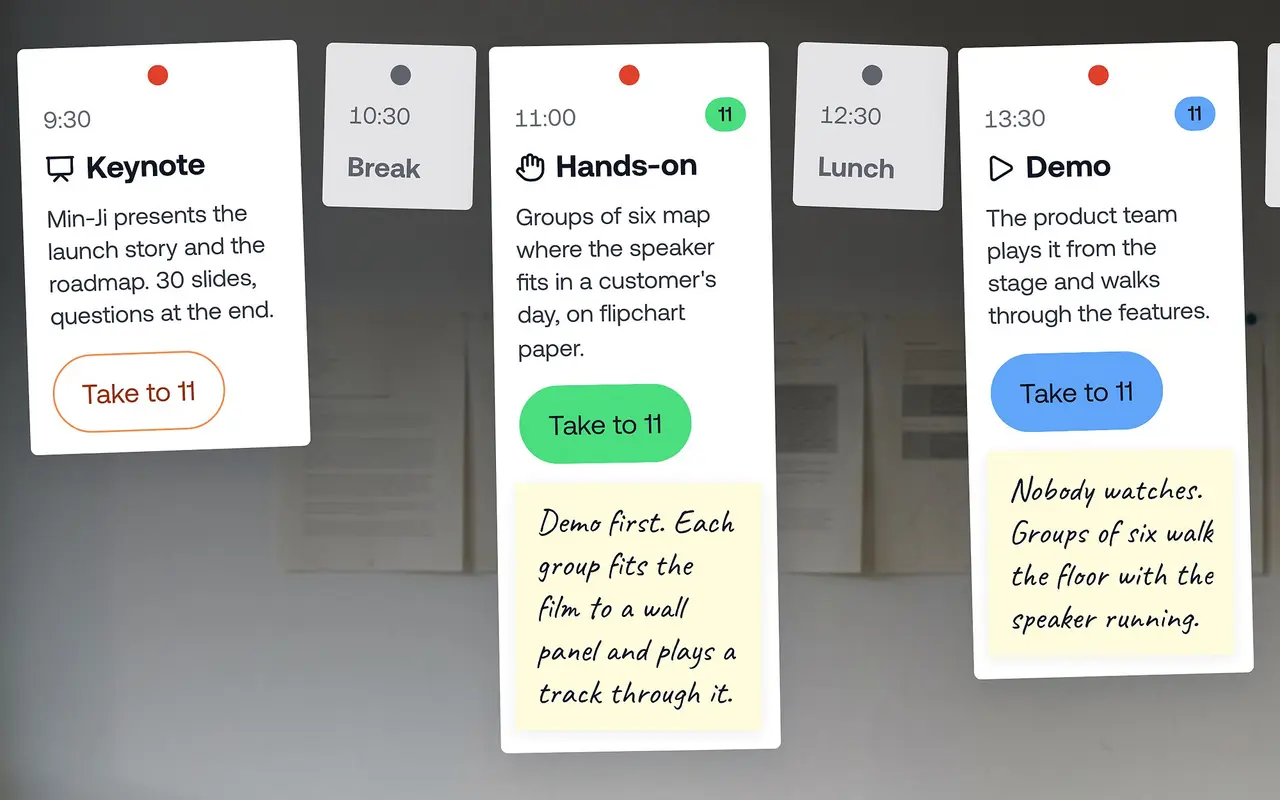
It starts with a warm-up: a few quick pieces to play first, short enough to do between meetings. Then the whole team meets the situation together, live, with a host running it.
If you keep going
Each session is a different situation from the same problem, played in small groups on a clock, then debriefed together.
Between sessions
Short drills each person plays alone, a few minutes at a time, with nudges and field guides in between. So each session starts further on than the last.
What you keep
The drill library, with progress your team can see, for 30 days after the last session. When the next big thing comes up, come back for another round, or have someone on your team host it on Rondo.
 Host


Where it worked
EY's innovation teams ran it for ten cohorts, on their own client work.
 EYEY's global innovation teams knew CX theory and had nowhere to practice it under pressure. We built the practice, then moved it onto Rondo.Read the case study
Got something coming up?
Tell us what's coming up with a client, and when, and we'll suggest where to start.